Cycling Pins - Leg Length Difference
LLD’s are a complicated and tricky area of the bike fitting experience. There are two types of leg length difference – structural and functional. The two are explained below;
1. Structural LLD’s
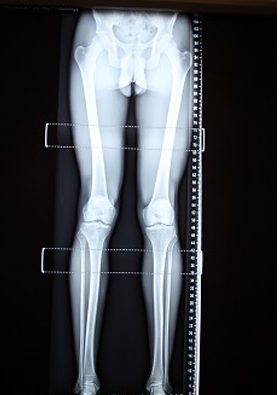
Structural LLD’s are relatively simple – during our growth spurts in our teenage years, often one of the tibial bones (the large, long bone below your knee to the foot) or the femur (large leg bone above the knee to the hip) or occasionally even the calcaneum (heel bone) will grow slightly quicker than the other. The reasons are unclear but the most logical explanation is usually a slight difference in the degree of vascular delivery to the growth plates in the bones. In other words, one of the bones has more blood flow and hence it grows more quickly. The end result is that at some point when you stop growing, you may end up with a LLD which can range from imperceptible to vast. A few days ago in our clinic we were visited by a young lady who has a 15mm LLD. She is a high-level compensator and had never known about the issue aside from having right sided lower back pain on the bike. Others will struggle with a 4mm discrepancy causing marked knee or back pain – such is the variety of human function.
Above is the author’s full-length leg Xray films taken to determine any structural LLD. We are able to refer the client off for these films as required under a Medicare rebate.
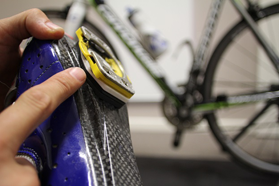
Other reasons for structural LLD’s can vary wildly – fractures, hip disease, joint replacements – the list is virtually endless. In cycling terms, the result is always the same – the rider will compensate for their LLD in some manner which forces a certain amount of asymmetry into their stroke. The compensation responses are as individual and widespread as their potential causes – a dropping hip on the shorter leg, a dropping hip on the LONGER leg, a pointed toe on the shorter leg….. the list goes on forever. In order to function as symmetrically as possible when cycling, the LLD needs to be compensated for. This is where shims and shim stacks come into play. Shim stacks sit between the sole of your shoe and the cleat and effectively lengthen your leg. A shim stack of the correct length is selected for riders with LLD’s to create the highest level of functional symmetry possible. Below you can see a small shim stack of 4mm underneath a Speedplay cleat.
2. Functional LLD’s
A functional LLD is what occurs when a rider presents with neurological, structural or muscular insufficiencies which prevent one leg from extending as easily, quickly or with as much control as the other. The causes, again, are myriad. A tight hamstring, a stiff sacro-iliac joint, a tight gluteal, a stiff ankle, a marked dominance of control of one side of your body – the list goes on. The end result is an asymmetry of function on the bike which is often much harder to pick than a structural LLD. They are also usually harder to fix. If you have a functional LLD which presents on the bike, I will find the cause and recommend that you remedy this to achieve the best possible functional symmetry. A common presentation, for example, is an inflexible hamstring complex on one side from, say, an old tear in the region. I will endeavour to set your bike up as perfectly as possible to achieve functional symmetry, then recommend that you go and do something about your hamstring tightness – either visit a good health professional or perform a targeted self-treatment regime on the area over some weeks to months. If, for example, I have added a 3mm shim stack to your functionally shorter leg, you should be able to remove the shim stack once the function in the hamstring returns to normal.