Cycling Pains - Feet and Calves
The feet are the single most important piece of the bike fit puzzle. Through your feet you transfer power to the pedals as well as receiving feedback via your nervous system as to the movement and load being generated. Any decrease in the ability of the feet to effectively transfer power will result in some type of compensatory response – this can vary from imperceptible feelings of “vagueness” on the pedal through to severe biomechanical problems extending up the kinetic chain into the knee and hips.
Human beings have evolved over thousands of years to walk and run. Cycling a bicycle is a very unnatural movement which differs from walking and running in a number of ways. The most major difference is the lack of impact of course. Unfortunately, impact is a vital part of the walking and running cycle – as we strike the ground with our heel or forefoot, it causes a sudden response in our lower leg musculature which causes these muscles to switch on. This is called a “tendon stretch reflex” and forms a large part of how our body times and co-ordinates reciprocal patterns of movement such as walking and running. When we get on a bike, there is no impact and so these stretch responses never get initiated.
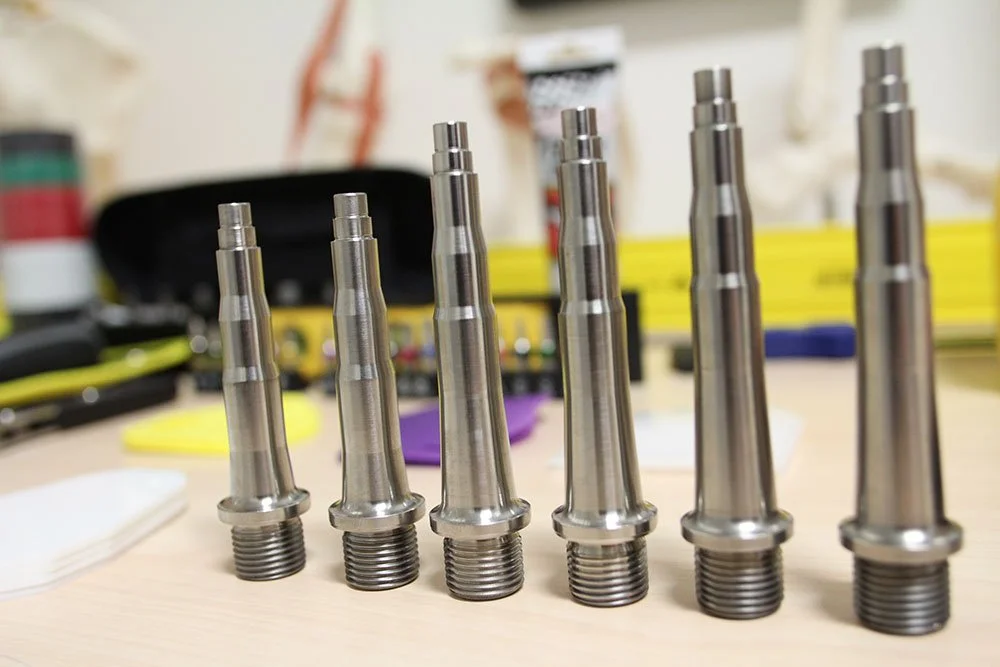
Longer and shorter Titanium Speedplay axles for altering the foot separation distance of the rider.
The implications of this vary from person to person depending on how much their central nervous system relies on the stretch response, but the overall problem is the same – the muscles which usually switch on to support our rearfoot and arch remain electrically silent and relaxed when we cycle. This means that the arch and rear of the foot has a MUCH greater tendency to drop and flatten when we cycle compared to when we walk or run.
Again, the individual variation between people is huge, and this is where foot correction comes in to play. A dropping arch or a varus tilt in your rearfoot will almost always lead to your knee being forced in closer to the top tube of the bike. The movement pattern can be a steady angulation in from the top of the stroke, or a marked ovality in the plane of the knee’s movement, or even a sudden violent “twist” at the bottom of the stroke as the calf disengages from the “push” phase and releases its control of your heel. The end result is always the same – cycle for long enough, and hard enough, and you will develop some type of problem from this – the first result is usually some type of knee pain.
When correcting the feet, we use Archtech G8 insoles with adjustable arch support and a solid heel counter to begin with. They are a well designed piece of gear which work perfectly for cycling. Almost every cyclist will require these modules. Despite Specialized offering shoes with in-built varus wedging, I am yet to see a pair of cycling shoes which have any meaningful arch support inside. This is a major oversight by the various shoe manufacturers as, unfortunately, the implications are not widely known.
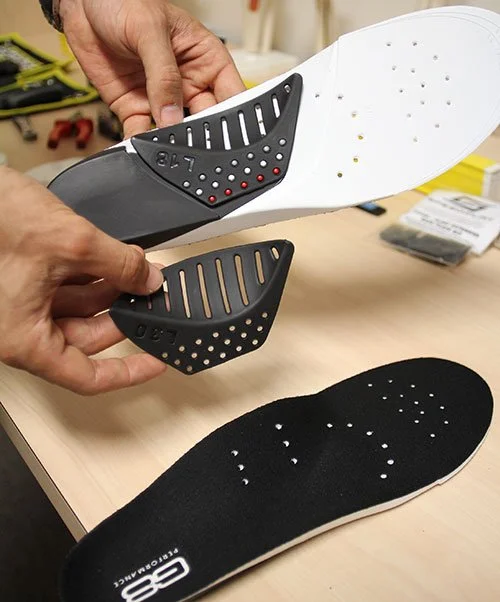
We start by determining the level of arch support required, then incrementally adjust the tilt of your rearfoot (heel) and, less commonly, your forefoot to seat the foot most firmly on the pedal and keep your knees moving perfectly in the same plane as the crank arm. In combination with Steve Hogg’s heel wedges, we use cleat wedging on the bottom of your shoe to cant the entire foot if that is what is required – this process is extremely detailed and requires a level of finesse and experience on the part of the bike fitter.
Foot problems on the bike range from hotspots, numb toes and the like through to cramping in the arch, Achilles pain and so on. The culprit in these circumstances is usually cleat position, seat height, shoe size or improper foot correction. It is impossible to list the possible causes and effects of such pains and annoyances as they are many and vary drastically between cyclists. In almost all cases these problems are fixable with a proper bike fit and well-matched shoes with good foot correction inside.