Cycling Pains - Knee Pain
Often the area that receives the most attention from cyclists and bike fitters alike is the knee. Knee pain manifests in many different ways on the bike, and traumatic injuries aside the issues are always overuse. That is to say that the pain increases gradually over one or more rides and is only relieved once off the bike. If the damage that the problem causes is great enough, the pain can carry over to your off-bike life as well.
Knee pain falls into two main categories;
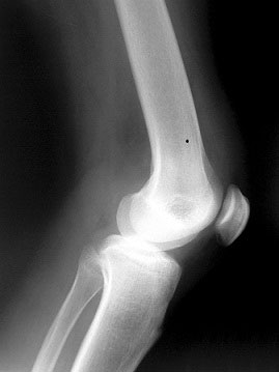
1. Pain arising from over or under-extension of the knee. Usually this is frontal or posterior knee pain, often the precursor is hamstring or quadriceps tightness and fatigue which then becomes a serious pain as the load of cycling continues through your ride. The painful structures are usually your patellar tendon (the large, triangular tendon connecting your kneecap to your lower leg) or the structures underneath it, and the hamstring insertions on the back of the knee. Less common is the origin tendons of the calf muscle which arise from just above your knee on the posterior aspect.
Most commonly these issues begin with a seat that is too high. For many years bike fitters have been using goniometers (joint measuring devices) and motion-capture software to measure the knee angles. You will commonly hear bike fitters and websites expousing rhetoric such as “the included knee angle at maximum extension must be between 142 and 148 degrees and at minimum extension………… and so on”. These measurements are “rules of thumb” are, as a general rule, largely useless for most cyclists. If you have particularly inflexible hamstrings, gluteals or a stiff lumbar spine for example, these “rules” will often result in you developing knee pain if the bike is setup in this manner.
I have a deep mistrust for any angle measurements of the knee being used as a guideline for seat height and/or setback and will never use such a narrow-minded view of the function of a person. Often the end result of such a fit is a seat that is too high. Any increase in seat height above optimum WILL result in some sort of instability on-saddle, which naturally carries down through the kinetic chain into the leg. Knee pain, hamstring issues and gluteal pain is often the result. I regularly see riders who have been fitted with the aid of computerised systems or motion capture software who are sitting up to 60mm too high. Yours truly was one of these riders many years ago, and severe right sided knee pain was the result. In my case, a well-known computerised fit system followed months later by a “professional” fit both put my seat height around 60mm too high. This is simply inexcusable for a paid service and, whilst the extremity of my case is unusual, the general pattern is not – most riders sit too high, and knee pain is often the result.
2. The other main category of knee pain is lateral or medial knee pains (on the inside or outside of your leg). These are more tricky and have a multitude of potential causes. Overwhelmingly, the direct cause of the knee pain is that the knee is trying to track in a different plane of motion to the arm of the crank. The knee is a simple hinge joint which is only reliably able to function if it is moving in the correct plane of movement. Any deviation of the knee in terms of torsional movement (twisting) or ovality in the tracking of the knee will result in excessive loading of the lateral structures (the Iliotibial Band or “ITB” is a common culprit) or, less commonly, the medial structures of the knee. Often pain will feel dull and “behind the kneecap” – this is a sure sign that the patella, the large bone in the front of your knee which acts as a force couple for the quadriceps musculature, is being pulled forcibly out of its natural vertical plane of motion on the front of the femur.
Long-term abuse of the patella tracking will result in the thin lining of cartilage on the back face being worn down steadily until osteo-arthritis (bone on bone) is the end result. Patellar mal-tracking is the most common of the knee pains that we see and can be caused by many different issues – almost all of which are either above or below the knee itself. Tight external rotators in the hip, tight and overactive hip flexors, weak medial quadriceps, a collapsing arch, improper cleat placement, too high or low a seat, or incorrect foot correction (rearfoot AND forefoot) can all play a part in forcing the knee to track in the wrong plane of motion.
Here is a rider showing a small right side bias by dropping his right hip and rolling it forwards. Notice that the hip does not rebound fully back to horizontal. The rider will often present with LEFT ITB and knee pain.
Most commonly we will see riders with left knee pain. This is usually a result of a right sided problem. Steve Hogg has written an excellent and well-informed article about what he and I call the “Right Side Bias”, you can find it HERE. It seems to be significantly more common to find a rider who drops and rolls the right hip than the left. Steve and I have postulated many different possible causes for this, but whatever the cause, it is a fact that a right side bias appears to be a lot more common than a left side bias. The consequent drop and roll of the right hip creates a “lift and tilt” of the left hip. This challenges the plane of motion of the left knee and seems to particularly irritate the ITB, leading to lateral pain or patellar maltracking. The issue is often resolved once the cause of the right hip drop is removed and the left knee is once more tracking cleanly.